An Urgent Call for a Change in Approach… Improving Men’s Health

From our previous blog posts, it is obvious that something is lacking in the promotion of men’s health not only in Ireland, but all over the world. We cant help but feel that its not for the want of trying that men’s health is suffering. Perhaps a call for a new approach is required. Think to yourself… when was the last time you have seen a men take matters into his own hands when suffering with a physical or mental sickness and seek help (unprompted by anyone)? The hardest part of getting men to take responsibility for their own health is getting them to start talking about it. The traditional health care approach in Ireland seemed to have a very structured uncomfortable feel to it coming from my own past experiences. From the general practitioner’s office visit all the way to the hospital never gave out any vibes that general chit-chat was welcome there.. a very gloomy place.

In Ireland, 100’s of communities of Men’s Shed’s exists in most of its counties. Men’s Shed’s provides a place for men of all ages to come, do a bit of work, relax with a cup of tea and have a general chat amongst other other members in its community. The men are not forced to talk about anything they are uncomfortable with and and because of this reason, they tend to be more open. This relaxed, unstructured approach seems to be extremely successful as many men around Ireland have reported that men’s sheds have had a big impact on their mental as well as physical health. Comparing this to the structured uncomfortable waiting room, Men’s shed’s creates a warm welcoming environment that encourages men to talk about anything at all, be it a sickness or a happy event in their lives, the main thing is, they are talking.

However, Men’s Shed’s is only an example of a different approach that may work with men’s health, although it is very a good example. Men’s health still struggles all around the world with health care systems that aren’t user friendly. think to yourself, what makes the male figures in your life express how their feeling, or even just talk about themselves more. While men’s health remains suffering, a call for a new approach still remains.

mens sheds.png

Men die quicker while women get sicker.. But why?

In our last blog we spoke about how gender being related to everyone and that this has different impacts on men and women’s health. We want to explore why this is.portrait-of-handsome-young-sad-man-in-front-of-a-window-4k_emzzbinke__F0000 (1).png

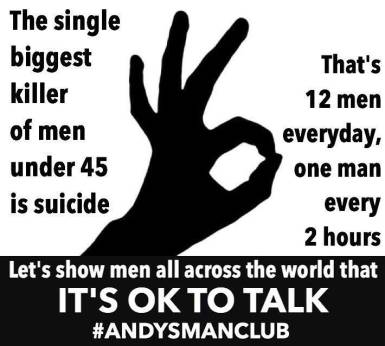
As soon as we are born we are assigned a gender, male or female. Males are expected to grow up to be strong, stoic problem solvers, things we consider to be masculine. Women are expected to be “girly” to like pink, to dress fancier and to be chatty, things that we consider to be feminine. But it is not as simple as this. What if a man is more feminine than he is masculine? or a woman is more masculine? most of you reading are probably thinking “that’s okay they should be allowed to be themselves” but even when these people are accepted and get along well with others they can feel outcast-ed and different, because they do not fit the norm. This can lead to depression, and unfortunately can sometimes lead to suicide and self harm. Here’s where we get to the “men die quicker part”. Men are more likely to commit suicide than women as men are expected to be emotionally strong and stoic, so they feel like going to speak with someone is emasculation and may refuse to do so. men are also more likely to try to talk themselves out of depression (Warren, 1983) This leads to the problem snowballing and eventually overwhelming them. This has led to slogans such as “its okay to talk” to encourage men to see someone if they’re feeling down and help to improve their mental health.

2470505540

Now for the “women get sicker” part. As women get older it leads to various health problems, and as many males are out of the picture it leads to statistics of people with health problems being skewed which makes it appear as if women are more prone to illness than men as they get older as only a minority of men have made it to the same age. It also appears as if women are more prone to illness as many men would rather not self-report that they have been or are ill and many men refuse to go see a doctor when they are sick due to the stigma of not being a stoic, masculine male. This leads to illnesses being caught when it’s too late and the unfortunate reality is this leads to the man getting very ill and sometimes passing away as a result, whereas women will usually go see a doctor and catch it early on and live on. what do you make of these differences?

We know this  blog may have been slightly upsetting to some readers but we would like our readers to take a positive message from it, we want readers to know that its okay to talk and encourage anyone having a hard time to do so, or to listen to a friends problems, it could just save a life!

Girls like pink, boys like blue…Just what exactly is gender? A worldwide divide in health status.

Recently we have taken upon a module of interest as part of our final year in college. Gender Specific Health Promotion, sounds straight forward right? We found ourselves receiving an in depth look at what exactly gender is and how being a certain gender creates expectations of us in a world where doing anything out of the ordinary can be considered “weird”. We found this not just interesting but eye opening. As we’ve recently come to understand, gender is not solely based on the biological sex of a person but rather the role they conform too and the characteristics they feel comfortable portraying to everybody else. For instance, women are portrayed to be weak, helpless and emotional while men are powerful, in control and stern. Anything outside or different to these characteristics are considered abnormal to the public as social media has reinforced the characteristics of a “real” man or woman.

Susan P Philips over at Queen’s University in the Department of Family Medicine, published a paper discussing that gender is related to everyone and how in return, being a specific gender has its impacts on both men and women’s health. She begins the paper by clarifying the difference between sex (biological factors) and gender (socially constructed role). She then goes on to discuss the widely emphasized myth that men’s mortality rates and health difficulties are directly related to their behavior in a “men behaving badly” style opinion believed worldwide. It is explained that both women’s and men’s behavior have similar impacts on health however just in different ways. We found this particularly interesting considering as men we feel like males are more prone to early death rates from the expectations applied to males through gender selection (hard labor jobs, risky activity etc.). If this was not the case, there must be more avenues to investigate in relation to how women are outliving men not just in Ireland, but in most of the developed countries around the world (Philips, 2005).

Further exploration of sources and lectures in the module pointed out a very obvious, yet un-thought of reason for earlier deaths in the male population. The idea of masculinity producing expectations of strong, independent men who don’t require any help from anyone. This means that most men will not seek medical attention unless as much as a near death issue arises. In other words, most men would nearly need an arm hanging off before agreeing to seek attention by a professional. This again is a socially constructed gender figure which is automatically applied to most men from an early age. Doyle (2001) explained clearly for us that “An unwillingness to admit weakness may prevent many men from taking health promotion messages seriously and from consulting a doctor when problems arise”. The fact that this socially constructed trait may affect males attending doctors when medical attention is required waves a big red flag for us and shows that there needs to be a different approach to men’s health implemented throughout the world. Gender specific health promotion is indeed, a necessity.